
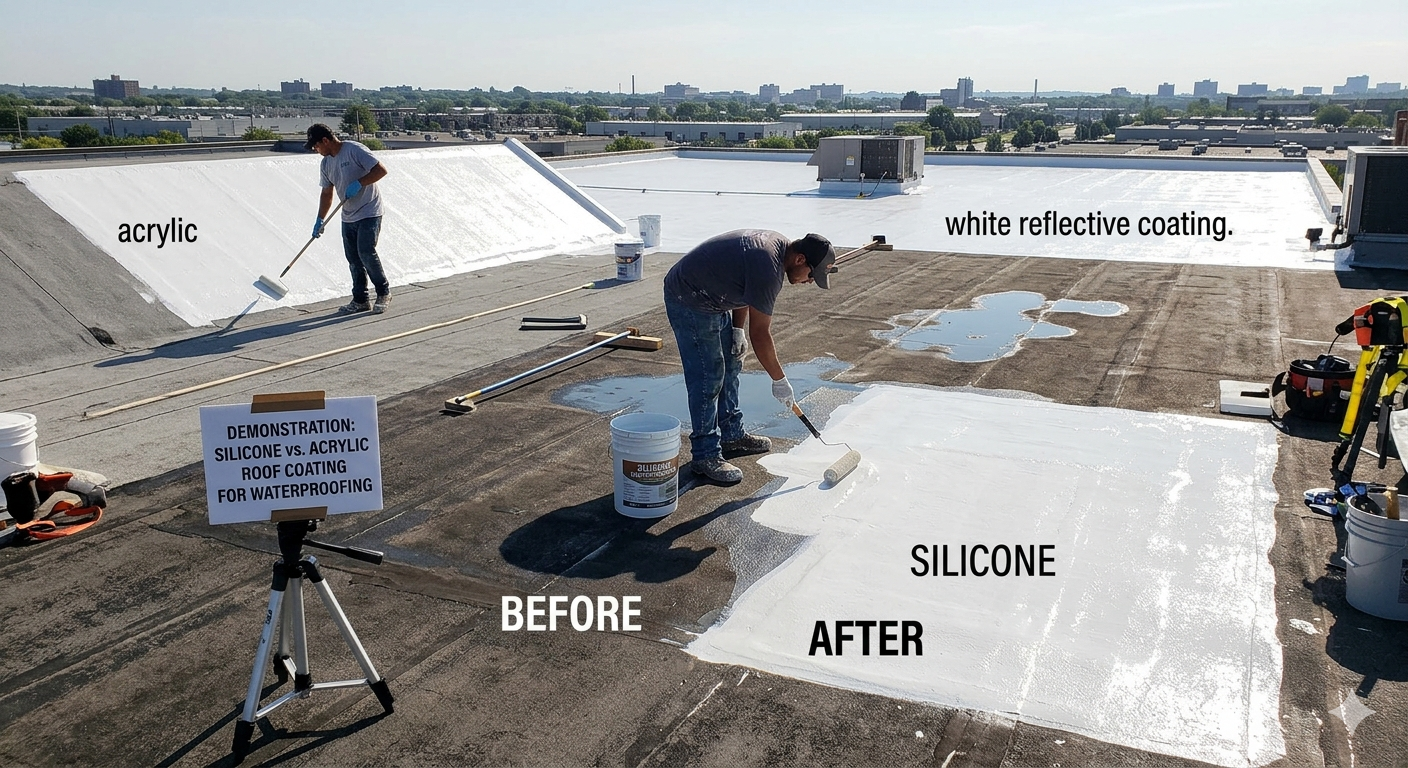
Roof leaks are one of the most common and costly problems for homeowners and commercial property owners. Whether you’re dealing with minor cracks or major water intrusion, choosing the right roof coating can make a huge difference in protecting your investment. In this guide, we’ll walk you through everything you need to know about selecting the best roof coating for leak protection and waterproofing, including silicone and acrylic options, costs, benefits, and expert tips.
What Is a Roof Coating?
A roof coating system is a seamless, waterproof membrane applied over an existing roof to protect it from moisture, UV rays, and weather damage. These coatings are especially popular for flat roofs and commercial buildings.
Key Benefits of Roof Coatings
- Provides waterproof roof coating protection
- Extends roof lifespan
- Improves energy efficiency with reflective roof coating
- Reduces repair and maintenance costs
- Offers a seamless roofing system
Types of Roof Coatings for Waterproofing
Choosing the right coating starts with understanding your options. The two most popular choices are silicone roof coating and acrylic roof coating.
1. Silicone Roof Coating
Silicone coatings are known for their superior waterproofing capabilities, especially in areas with heavy rainfall or standing water.
Advantages:
- Excellent for ponding water problems
- Long lifespan (15–20 years)
- Strong UV-resistant coating
- Minimal maintenance required
Best For:
- Flat roofs
- Commercial roof coating systems
- Areas with frequent rain
2. Acrylic Roof Coating
Acrylic coatings are water-based and highly reflective, making them ideal for energy efficiency.
Advantages:
- Cost-effective solution
- Great for metal roofs
- Reflects sunlight and reduces cooling costs
- Eco-friendly roof coating option
Best For:
- Sloped roofs
- Warm and dry climates
- Budget-conscious projects
Silicone vs Acrylic Roof Coating
Choosing between silicone and acrylic depends on your specific needs. Here’s a quick comparison:
| Feature | Silicone Roof Coating | Acrylic Roof Coating |
| Waterproofing Ability | Excellent | Good |
| Ponding Water Resistance | High | Low |
| Cost | Higher | Lower |
| UV Resistance | Excellent | Very Good |
| Lifespan | 15–20 years | 8–12 years |
| Best Application | Flat roofs | Metal & sloped roofs |
Factors to Consider When Choosing a Roof Coating
1. Roof Type
Different coatings work better on different surfaces:
- Flat roofs → Silicone roof coating for flat roofs
- Metal roofs → Acrylic roof coating for metal roofs
- Low-slope roofs → Elastomeric roof coating
2. Climate Conditions
Your local climate plays a major role:
- Heavy rain → Choose silicone coating
- Hot climates → Use reflective roof coating
- Cold regions → Flexible coatings to prevent cracking
3. Budget and Cost
Understanding roof coating cost per square foot helps in planning.
- Silicone roof coating cost: Higher upfront
- Acrylic roof coating cost: More affordable
However, silicone often offers better long-term value due to durability.
4. Durability and Lifespan
Ask yourself:
- How long does silicone roof coating last? (15–20 years)
- Acrylic coating lifespan? (8–12 years)
If you want a long-term solution, silicone is usually the better investment.
5. Existing Roof Condition
Before applying any coating:
- Inspect for cracks or leaks
- Perform necessary roof coating repair
- Ensure proper cleaning and preparation
Best Roof Coating for Common Problems
Roof Leak Repair
- Use silicone roof coating for severe leaks
- Apply waterproof membrane for extra protection
Cracked Roof Surface
- Use elastomeric or acrylic coatings
- Seal cracks before coating
Ponding Water Issues
- Silicone coating is the best solution
Extreme Heat Protection
- Choose heat-resistant roof coating
- Reflective coatings improve energy efficiency
Installation Process: What to Expect
A professional roof coating installation typically includes:
- Roof inspection
- Cleaning and preparation
- Repair of damaged areas
- Application of primer (if needed)
- Coating application
- Final inspection
DIY vs Professional Installation
DIY:
- Lower cost
- Suitable for small areas
Professional:
- Better results
- Ideal for commercial roof coating
- Ensures warranty compliance
Maintenance Tips for Roof Coatings
To maximize the life of your coating:
- Schedule regular inspections
- Clean debris and dirt
- Reapply coating when needed
- Address small leaks immediately
How to Find the Right Roof Coating Contractor
Choosing the right contractor is just as important as selecting the coating.
Look for:
- Experience in roof coating services
- Positive customer reviews
- Licensed and insured professionals
- Free estimate offerings
Search for:
- “roof coating contractors near me”
- “commercial roof coating company in [your city]”
Eco-Friendly and Energy-Efficient Roofing Options
Modern coatings offer sustainable benefits:
- Reduce heat absorption
- Lower energy bills
- Use environmentally friendly materials
- Improve building comfort
A reflective roof coating can significantly cut cooling costs in hot climates.
Final Thoughts
Choosing the best roof coating for leak protection and waterproofing depends on your roof type, climate, and budget. If you need superior waterproofing and durability, silicone roof coating is the best choice. For affordability and energy efficiency, acrylic roof coating is a great alternative.
By understanding your needs and working with experienced roof coating contractors, you can protect your property, extend your roof’s lifespan, and save money in the long run.
FAQs
What is the best roof coating for leaks?
Silicone roof coating is considered the best due to its waterproofing ability.
How long does roof coating last?
Silicone lasts 15–20 years, while acrylic lasts 8–12 years.
Can roof coating stop leaks?
Yes, a properly applied coating can seal leaks and prevent future damage.
Is roof coating worth it?
Absolutely. It extends roof life, improves energy efficiency, and reduces repair costs.